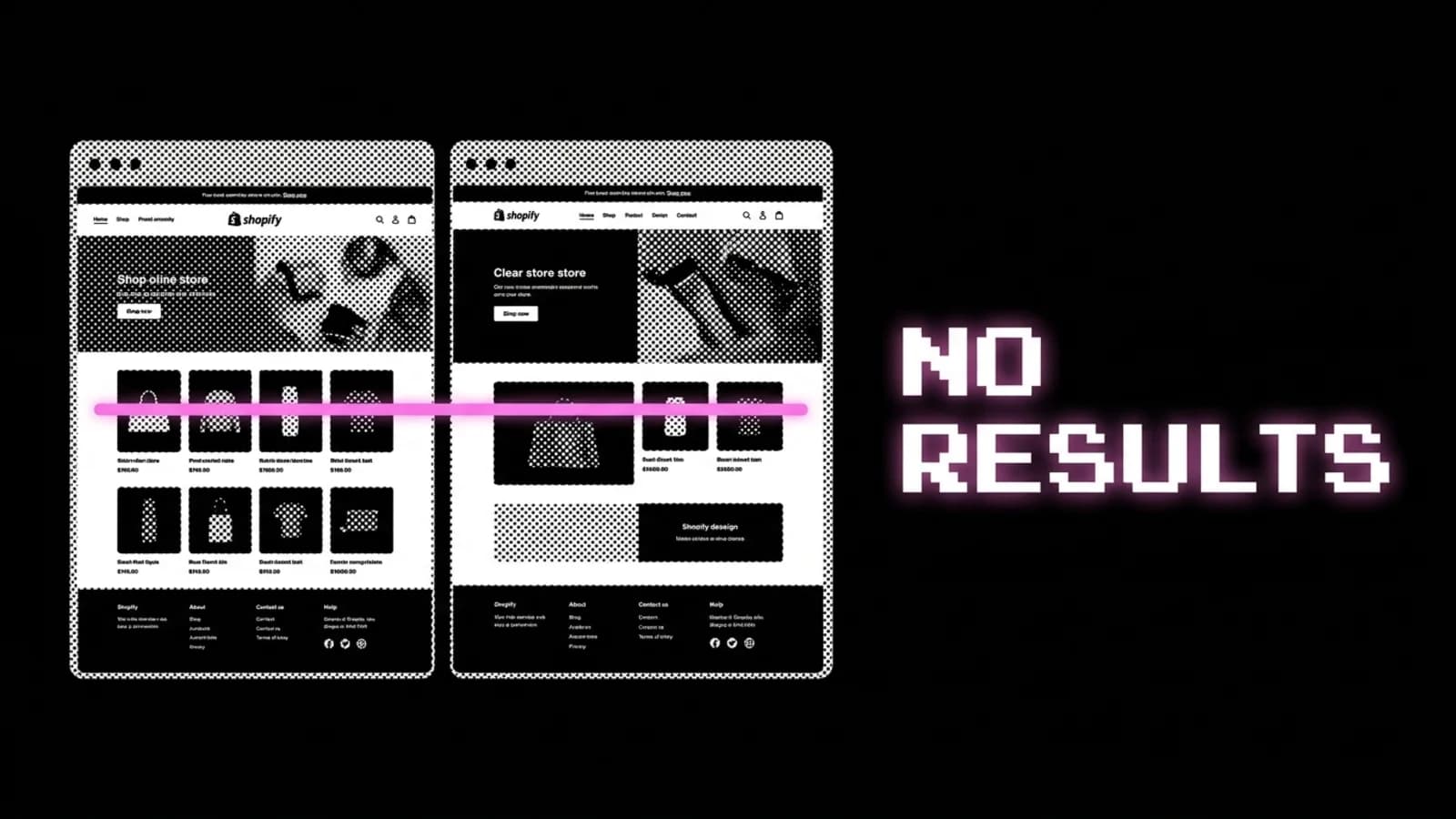
You paid for a redesign. The store looks sharper, the team is happy, the screenshots are clean. Then a month passes and conversion is exactly where it was. This is the most common redesign outcome I see, and it is not bad luck. It is what a redesign is built to do.
I run Skuology and build Upsellr. This comes from 90+ Shopify projects. The pattern below shows up again and again.
Key Takeaways
- A redesign changes how a store looks; it rarely changes what was breaking the sale.
- Launching without a measured baseline means you cannot prove the redesign helped or hurt.
- A redesign changes many things at once, so no single change can be credited or blamed.
- Conversion problems usually live in the structural layer (trust, clarity, product page, mobile), not the visual style.
- Stores move metrics when one partner connects design, copy, offer, UX, and psychology, then runs a measure-and-iterate loop.
The redesign moved taste, not the problem
A redesign answers the question "how should this look?" Conversion answers a different question: "what is stopping this visitor from buying?" Those are not the same variable, and a project scoped around the first one rarely touches the second.
Think about what a typical redesign actually changes. New typography, a refreshed palette, bigger hero images, a cleaner grid. All real work. None of it speaks to the reason a visitor hesitated. If the old homepage buried its trust signals, the new one usually buries them too, just in a nicer font. The structure carried over. Only the surface changed.
So the store looks like a different business and behaves like the same one. That is not a failed redesign. It is a redesign doing its job, on the wrong problem.
You changed everything, so you can prove nothing
Here is the quieter issue. A redesign ships dozens of changes in a single release. New layout, new copy, new images, new navigation, all at once. When conversion stays flat, you have no way to know which changes helped, which hurt, and which canceled each other out.
That is the opposite of how you learn what works. A test isolates one change against the old version and proves it before you commit. A redesign bundles everything and proves nothing. Worse, it carries downside risk: a "modernized" page can quietly remove the exact element that was doing the selling, and you would never spot it inside the noise.
This is why, for most stuck stores, targeted testing beats a rebuild. I wrote the full decision framework in Shopify redesign vs CRO tests. Redesign when the structure itself is broken. Test when you are tuning a structure that mostly works.
The targeted version of this is high value. Baymard estimates the average large ecommerce site can lift conversion by around 35% through better checkout design alone (Baymard, 2025). That is a focused program against a known leak, not a full repaint.
One layer is not the system
Most redesigns are single-lane. A design agency looks at design. A dev shop looks at features. A CRO contractor looks at tests. A copywriter looks at words. Each is competent inside its lane, and none of them owns the result.
But a store does not grow in separate boxes. It grows when one person can look at it and say where trust is breaking, where the product page fails to explain the offer, where a section looks nice but is not helping the sale, and where the real issue is the offer, not the design. That cross-discipline view is the Polymath Growth Partnership™ lens, and it is the part most retainers and most redesigns miss.
A redesign delivered without it optimizes the one slice the provider can see. The visuals improve. The revenue does not, because the thing that was actually leaking sat in a lane nobody owned.
What actually moves metrics
Treat the store as a living growth system, not a one-time art project. That means three things, in order.
First, fix the structural layer before the surface. Trust on the homepage, a clear offer, a product page that does the selling, a mobile experience that holds up. This is the Baseline Conversion Blueprint™: more people buy because the foundation finally works. A pretty page on a broken foundation still converts like a broken foundation.
Second, install the monetization layer so each buyer is worth more. Bundles, cart offers, and post-purchase upsells that feel helpful rather than pushy. That is the Invisible Second Sale™, and tools like Upsellr handle the placements.
Third, run the loop. Audit and analyze, design and implement, then measure and iterate, on repeat. The first pass buys clarity, the second puts improvements live, the third starts compounding. Growth is rarely one big fix. It is a series of clear improvements that stack: one better product page, one stronger cart offer, one sharper homepage section, then another.
A redesign is a single event with no measurement attached. A growth system is a loop with a baseline. Only one of them reliably moves the number you care about.
Shopify redesign FAQ
Why didn't my Shopify redesign improve conversion?
Most redesigns change how the store looks without changing what was actually breaking the sale. If the old site had a trust gap, an unclear offer, or a weak product page, a prettier version of the same structure carries those problems forward. Looks and conversion are different variables, and only one of them was addressed.
Is a redesign or CRO testing better for a stuck store?
For most stuck stores, targeted CRO work beats a full redesign. A redesign changes many things at once, so you cannot tell what helped or hurt, and it carries real downside risk. Tests isolate one change and prove it before you commit. Redesign only when the structure itself is the problem, not the paint.
How do I know if my redesign actually worked?
You need a baseline measured before the change and a clean comparison after, on the same traffic mix. Conversion rate, revenue per visitor, and add-to-cart rate are the honest scoreboard. If you launched without a baseline, you cannot claim the redesign worked or failed, only that it looks different.
What should I fix before redesigning a Shopify store?
Fix the structural layer first: the trust signals on the homepage, the clarity of the offer, the product page's job of selling, and the mobile experience. Most conversion problems live in that layer, not in the visual style. A redesign that skips it just restyles the same broken structure.
Why do agency redesigns often fail to move revenue?
Single-lane providers see one slice. A design agency optimizes visuals, a dev shop ships features, an ads team buys traffic. Stores grow when one partner connects design, copy, offer, UX, and psychology, then measures the result. A redesign delivered without that cross-discipline view and a measurement loop usually moves taste, not revenue.
What to do next
If your last redesign moved taste and not revenue, do not order another one. Start by fixing the structural layer, then the monetization layer, then keep the loop running.
If you want to do it yourself, the moreaov.com templates ($17) and buildmyupsell.com done-for-you upsells ($97) are the cheapest first steps on the AOV side. If you want a partner who treats the store like their own and runs the growth loop with you, book a Skuology Growth Partner™ strategy call and tell us "GROWTH". No inflated guarantee, no fantasy math. Just the loop, run properly, until the metrics actually move.